EVO ICL and sinus surgery are both important procedures, but many patients wonder if having one affects the safety of the other. Understanding how these treatments interact is key to protecting your vision and overall health. In this article, we’ll explain what you should know, what questions to ask your surgeon, and how to make the safest choices for your care. Read on to learn the facts before moving forward with either procedure. To get personalized guidance, schedule a consultation with Waite Vision today.
How do EVO ICL and sinus surgery affect each other?
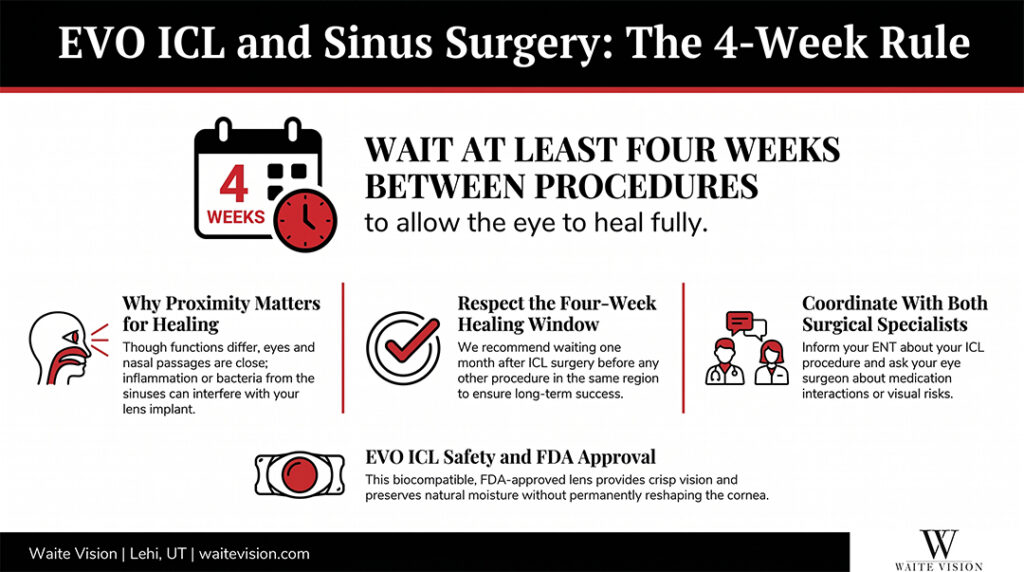
EVO ICL and sinus surgery should not be scheduled close together because healing time, pressure sensitivity, and infection risks overlap in ways that can affect your outcome. Even though the eye and nasal passages serve different functions, they are located near each other, and inflammation or bacteria from sinus surgery could interfere with the healing of your phakic intraocular lens implant. To protect the eye and surrounding tissue, Waite Vision recommends waiting until your eye is fully healed usually after one month before undergoing any other procedure in the same region. This allows for a safer recovery and helps ensure long-term success with your EVO ICL results.
Why is timing important when planning EVO ICL and sinus surgery?
Timing is important because your body needs time to recover from one procedure before starting another. After EVO ICL surgery, patients are advised to avoid any surgery in nearby areas—including the sinuses—until the eye surgeon confirms your healing is complete. This generally takes four weeks. During this period, wound healing is actively taking place, and introducing other variables like nasal inflammation or medication could increase your healing time. Coordinating the timing with both your eye surgeon and ENT surgeon reduces risk and supports the best outcomes.
What questions should I ask my eye surgeon about EVO ICL and sinus surgery?
You should ask your ophthalmology specialist how long to wait before having sinus surgery, which eye drop medications need to be continued, and whether your sinus procedure may increase risks of visual impairment or infection. You’ll also want to discuss which signs and symptoms—such as glare, eye pain, or pressure—should prompt a follow-up. Ask about medication interactions and whether any special therapy or post-op precautions should be taken after your sinus procedure. This communication protects your intraocular lens and your long-term eye health.
What questions should I ask my ENT surgeon before sinus surgery?
Before scheduling sinus surgery, let your ENT surgeon know you’ve had an EVO ICL procedure. Ask whether the presence of the lens will change the surgical plan, and whether the medications or anesthesia used could interfere with your eye healing. Your surgeon should explain any changes in the procedure, post-op expectations, and what to monitor afterward. Discuss your full medical and surgical history, including refractive surgery, so your sinus surgeon can make informed decisions that protect your eyes and overall health. Fortunately, ICL surgery does not present any problems with the sinuses and will not affect sinus surgery adversely.
What makes EVO ICL a safe option for vision correction?
EVO ICL is a safe and effective solution for patients with moderate to high myopia or astigmatism who may not qualify for LASIK. It uses a phakic intraocular lens implanted behind the iris, offering crisp, clear vision without permanently reshaping the cornea. The implant is biocompatible and can be removed or replaced by your surgeon if needed. Most patients at Waite Vision enjoy rapid visual acuity improvement and enhanced visual perception within days, although complete healing may take several weeks. A complete eye examination is performed beforehand to determine candidacy and tailor the procedure to your unique needs. Like any procedure, there are remote risks such as infection, elevated pressure, or rare cataract formation, but these are uncommon when surgery is performed by a skilled eye care provider.
Get started, book now.
Why is FDA approval important for EVO ICL patients in the United States?
FDA approval by the Food and Drug Administration shows that EVO ICL has passed rigorous testing for safety, visual outcomes, and long-term effectiveness. Clinical trials confirmed that the lens improves vision for patients with refractive error such as near-sightedness, farsightedness, and astigmatism. Most patients achieve 20/20 vision or better and report reduced dependence on their eyeglass prescription or contact lens wear. Unlike some procedures that can contribute to dry eye syndrome, EVO ICL maintains the natural moisture balance of the eye by preserving corneal tissue. FDA approval also means the lens must meet strict manufacturing and safety standards, giving patients in the United States confidence that this is a reliable and well-regulated procedure.
What should I discuss with my ENT before sinus surgery?
Before sinus surgery, patients should review their full medical history, including any recent vision procedures, medications, or supplements. Blood thinners, herbal supplements, and NSAIDs should be stopped prior to surgery as instructed to reduce the risk of bleeding. Patients may need imaging such as CT scans, and possibly additional pre-op tests depending on age and general health. Discuss potential risks, expected results, and whether your individual anatomy or existing sinus disease may influence outcomes. Your ENT may also coordinate with Waite Vision to ensure nothing in the sinus procedure interferes with your prior eye surgery.
What should I expect during sinus surgery recovery?
Recovery after sinus surgery is generally smooth, especially when performed with modern minimally invasive techniques. You may have nasal packing, temporary discomfort, or mild bleeding, but serious complications are rare when proper aftercare is followed. Your ENT will provide wound care instructions and outline which medication is safe to use. Follow-up appointments help ensure everything is healing as expected. If you’ve had recent eye surgery, report any changes in vision, unusual pressure, or discomfort to your eye doctor to rule out complications related to your ICL implant.
Let’s Make a Plan That Fits You
At Waite Vision, we understand that your vision and sinus health are both important—and sometimes both need attention. Whether you’ve already had eye surgery or are considering EVO ICL, we work with you and your other care providers to keep your health and safety the top priority. With expertise in refractive surgery, personalized treatment plans, and advanced technology, you can feel confident moving forward. Schedule a consultation today to find out if EVO ICL is the right solution for your lifestyle and vision goals.
Medically Reviewed By:
Aaron Waite, MD
Board-Certified Ophthalmologist
Fellowship-Trained Refractive Surgeon, WCRS
Last reviewed August 7, 2026
source https://www.waitevision.com/icl-utah/evo-icl-and-sinus-surgery-whats-safe-and-what-to-ask-your-surgeon/

0 件のコメント:
コメントを投稿