2026年8月7日金曜日

“I’ll Just Wait Until the Technology Gets Better” — Why Perpetual Postponement Is the Worst LASIK Strategy

At Waite Vision, we hear it often. A patient has been researching LASIK for years — maybe since they first switched to contact lenses in college, or the last time their glasses prescription changed. The reasoning sounds sensible: technology keeps improving, so shouldn’t you wait until it’s even better? We understand the logic, but in our experience, that kind of waiting doesn’t serve you. It costs you. Here’s why.

The Comfortable Trap: Why “I’ll Wait” Feels So Rational

Deciding to postpone any elective surgery feels responsible. You’re being careful. You’re doing your research. And with refractive surgery — a procedure involving your eye — caution seems especially warranted.

But there’s a psychological pattern at work here that’s worth naming: status quo bias. It’s the tendency to default to inaction because it feels safer than committing to a change, even when that change would genuinely and significantly improve your life. For people who’ve worn glasses or relied on a corrective lens for years, this pattern is deeply familiar. The friction of everyday life with a refractive error has been normalized. You’ve adapted. And so waiting for the “perfect moment” or the “next big breakthrough” becomes a comfortable reason to stay exactly where you are.

We’re not suggesting you shouldn’t think carefully before any surgery. You should. But healthy due diligence has a natural endpoint. Perpetual postponement does not.

LASIK waiting cost

Where LASIK Technology Actually Stands Today

Here’s what the data shows: LASIK is one of the most studied elective procedures in the history of medicine. Patient satisfaction rates consistently exceed 98%, and clinical outcomes have continued to improve as the technology has matured. Today’s procedures use wavefront-guided and topography-guided laser platforms, femtosecond lasers for precise corneal flap creation, and real-time eye tracking that compensates for even subtle movement during the procedure.

Dr. Waite performs LASIK using some of the most advanced laser systems available — technology so precise it can write letters on a single strand of human hair. The excimer laser reshapes the cornea to correct refractive errors including myopia (near-sightedness), astigmatism, and farsightedness at the source, rather than compensating in front of the eye the way glasses and contact lenses do. The result is improved visual acuity that a corrective lens simply cannot replicate.

From the standpoint of ophthalmology, modern LASIK is not experimental. It has been FDA-approved for over 25 years, endorsed by NASA, and trusted by multiple branches of the U.S. military. The technology has reached a level of refinement where the improvements still on the horizon are incremental — not transformational.

The Myth of the Revolutionary Breakthrough That Changes Everything

Medical technology doesn’t typically advance in sudden, dramatic leaps. It moves forward in measured, incremental steps — each one meaningful, but none so significant that it invalidates what came before.

When patients tell us they’re waiting for gene therapy, stem cell treatments, or next-generation lens replacement procedures to become widely available, we understand the appeal. Those developments are real and are being researched. But “available in clinical trials” and “ready for routine surgery next month” are very different things. Realistic timelines for those innovations to reach standard clinical use are measured in decades, not years.

Consider the patient who decided in 2010 to wait just a little longer. They waited through 2015. Then 2020. Then 2024. The surgery they could have had in 2010 would have delivered excellent visual acuity with very low risk. Instead, they spent 14 years managing a refractive error with glasses and contact lenses — accumulating cost and inconvenience — while the breakthrough they were waiting for never materialized into a reason to act.

Improvements in refractive surgery will continue. We welcome them. But waiting for a version of the procedure that doesn’t exist yet, while a highly effective version exists today, is not a strategy. It’s avoidance.

Get started, book now.

The Hidden Costs of Waiting (That Nobody Calculates)

Most patients focus on the upfront cost of LASIK and overlook everything they’re already spending. The average person spends over $25,000 in their lifetime on glasses, contact lenses, solution, and eye exams due to refractive errors. Every year spent waiting adds to that total.

Beyond the financial reality, there are costs to everyday life that are harder to quantify. Waking up and reaching for glasses before you can read the alarm clock. Managing contact lens hygiene while traveling. The signs and symptoms of dry eye syndrome that can worsen over years of contact lens wear. The moment during a workout, a swim, or an outdoor activity when your corrective lens becomes a liability rather than a solution.

Visual perception affects everything. Driving at night with near-sightedness and marginal correction. The low-grade frustration of foggy lenses on a cold morning. The dependency that comes from needing a device just to function clearly in the world. These aren’t costs designed to alarm you — they’re costs you’ve simply normalized. A consultation with Dr. Waite gives you an honest look at what that normalization is actually costing you.

What Our Patients Say About Waiting

We hear the same thing from patients after their surgery: “Why did I wait so long?”

One patient in her early 30s had worn contact lenses since middle school. She’d been researching LASIK for four years before finally scheduling a consultation at Waite Vision. Within 24 hours of her procedure, she had better than 20/20 visual acuity. Her only regret was the years she spent managing a refractive error that surgery resolved in minutes.

Another patient — a father of three who had avoided water activities because of his near-sightedness — told us the first time he took his kids swimming without worrying about his corrective lens was a moment he hadn’t expected to feel so significant.

Individual results vary, and not every patient is a candidate for LASIK. Some may be better served by an alternative such as photorefractive keratectomy (PRK), EVO ICL, or another refractive surgery option we offer at Waite Vision. But for those who are candidates, the data is consistent: the procedure delivers, and the regret almost universally runs in one direction — wishing they had acted sooner.

How to Know When You’re Ready (Hint: It Might Be Now)

Readiness for LASIK isn’t a feeling — it’s a checklist. Basic candidacy criteria include a stable prescription for at least one year, adequate corneal thickness and health, age 18 or older, and no disqualifying conditions such as severe dry eye syndrome or significant corneal disease. A comprehensive evaluation with Dr. Waite will confirm whether LASIK is the right procedure for you, or whether another option is a better fit for your eyes.

There is a window of optimal candidacy. Waiting too long doesn’t just cost time — it can narrow your surgical options as the eye changes with age. A consultation at Waite Vision is not a sales pitch. It’s a thorough diagnostic evaluation designed to give you accurate, personalized information about your candidacy for LASIK or any other form of refractive surgery we provide. What you do with that information is entirely your decision.

Your Next Step: Stop Researching, Start Seeing

The technology is sound. The surgeon is experienced. The data supports action. The only thing standing between you and clear, unaided vision is the appointment you haven’t scheduled yet.

You’ve spent enough years wondering “what if.” Schedule your free LASIK consultation at Waite Vision today and find out exactly what’s possible for your eyes — not in some theoretical future, but right now.

Medically Reviewed By:
Aaron Waite, MD
Board-Certified Ophthalmologist
Fellowship-Trained Refractive Surgeon, WCRS
Last reviewed August 7, 2026


source https://www.waitevision.com/lasik-utah/ill-just-wait-until-the-technology-gets-better-why-perpetual-postponement-is-the-worst-lasik-strategy/

How Do Custom LASIK Procedures in Utah Differ from Standard LASIK?

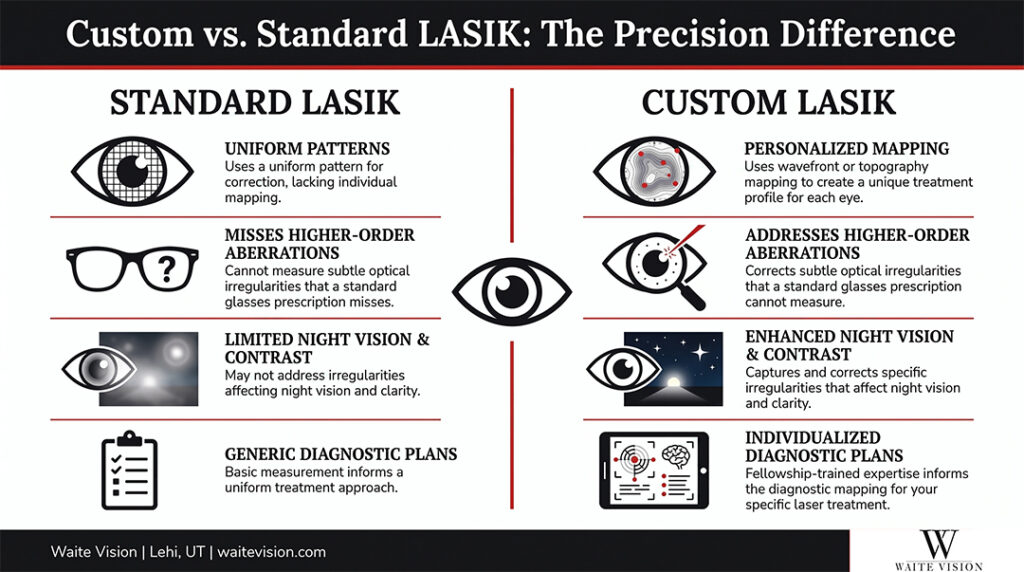
Patients researching LASIK in Utah increasingly encounter two distinct categories: custom procedures that map the individual optical profile of each eye, and standard procedures that apply a uniform correction based on a glasses prescription alone.

How Do Custom LASIK Procedures in Utah Differ from Standard LASIK?

Custom LASIK in Utah uses wavefront or topography mapping to create a treatment profile unique to each eye, measuring optical imperfections beyond a standard glasses prescription. Standard LASIK corrects only basic refractive error (nearsightedness, farsightedness, and astigmatism) using a uniform ablation pattern. The distinction is clinically meaningful. Custom procedures capture and correct higher-order aberrations, subtle optical irregularities that affect night vision, contrast sensitivity, and overall visual clarity, during the laser treatment itself.

At Waite Vision in Utah, I perform both wavefront-guided and topography-guided LASIK. My fellowship training in cornea, external disease, and refractive surgery at the University of Colorado School of Medicine, along with WCRS fellowship certification, informs the diagnostic mapping process I use to design each patient’s individualized treatment plan.

what is custom lasik

Who Benefits Most from Custom LASIK vs. Standard LASIK in Utah?

Patients with higher-order aberrations, large pupils, or complex prescriptions benefit most from custom LASIK in Utah. Custom wavefront mapping detects optical irregularities that a standard refraction cannot measure, allowing the laser to target imperfections that affect night vision, contrast sensitivity, and visual sharpness. Straightforward low myopia is the exception. Patients with no measurable higher-order aberrations may achieve similar outcomes with either approach, though custom mapping still provides a more precise diagnostic baseline.

At Waite Vision, every LASIK candidate in Utah receives custom wavefront and topography mapping during their evaluation, before any procedure decision is made. This diagnostic-first approach identifies who will benefit most from custom correction and ensures no candidate proceeds without a complete picture of their individual optical profile.

What Results Can Utah Patients Expect from Custom vs. Standard LASIK?

Clinical studies show custom wavefront-guided LASIK produces measurably sharper vision with fewer visual disturbances than standard LASIK. Patients treated with wavefront-guided technology report reduced glare, halos, and night vision disturbances compared to standard correction. Precision explains the gap. The wavefront-guided approach maps each eye with substantially greater accuracy than a standard refraction, correcting optical irregularities that affect post-operative visual quality. As of 2026, this outcomes advantage is documented in peer-reviewed refractive surgery literature.

At Waite Vision, I track every patient’s visual outcomes after custom LASIK to ensure results align with the precision standards expected from wavefront-guided correction. My fellowship training in cornea, external disease, and refractive surgery at the University of Colorado School of Medicine included focused work on outcomes analysis and treatment refinement.

What Is Wavefront-Guided LASIK and How Does It Work for Utah Patients?

Wavefront-guided LASIK uses a wavefront aberrometer, a diagnostic instrument that maps how light travels through the entire optical system of the eye, to create a three-dimensional treatment profile. This map captures higher-order aberrations, optical imperfections beyond basic refractive error that a standard refraction does not fully measure. The laser then reshapes the cornea with a customized ablation pattern tailored to each eye’s specific measurements, rather than a uniform correction.

At Waite Vision in Utah, I incorporate wavefront aberrometry into every custom LASIK evaluation. The diagnostic mapping process goes beyond a standard glasses prescription to identify the specific optical profile of each eye, which directly informs the customized treatment plan I design for each patient.

Get started, book now.

What Is the Difference Between Wavefront-Guided and Topography-Guided LASIK in Utah?

Wavefront-guided LASIK maps how light travels through the entire optical system of the eye, including the cornea and internal lens. Topography-guided LASIK maps only the corneal surface with high-resolution detail. Wavefront-guided correction addresses both corneal and internal optical aberrations, while topography-guided correction targets corneal irregularities with greater surface-level precision. Utah practices offering both technologies can match the appropriate approach to each patient’s specific diagnostic profile.

At Waite Vision, I offer both wavefront-guided and topography-guided LASIK in Utah, selecting the approach based on each patient’s diagnostic results. Having both technologies available means I can match the treatment to each eye’s specific needs rather than applying a one-size-fits-all correction. [Platform names for each: confirm with Waite Vision]

Does Custom LASIK Cost More Than Standard LASIK in Utah?

Custom LASIK in Utah typically costs more than standard LASIK eye surgery due to advanced diagnostic mapping and specialized laser programming. As of 2026, Utah LASIK pricing varies by practice, technology used, and the complexity of each patient’s correction. The additional cost reflects the wavefront or topography-guided diagnostic process and the individualized ablation profile, not simply a premium label. Many Utah practices include custom mapping in standard LASIK pricing rather than offering it as a separate upgrade.

A coporate owned LASIK center like LASIK Plus, who is At Waite Vision, custom wavefront and topography mapping is included in every LASIK evaluation in Utah, so patients receive the most complete diagnostic picture available before any procedure decision is made. [Confirm with Waite Vision: Is mapping included in standard pricing or offered as an upgrade?]

Do Utah LASIK Practices Offer Blade-Free LASIK Options?

Most Utah LASIK practices offering custom procedures now use all-laser, blade-free technology for flap creation. Blade-free LASIK uses a femtosecond laser to create the corneal flap instead of a mechanical microkeratome blade. The femtosecond laser produces a more precise and uniform flap with predictable thickness, which contributes to the overall accuracy of custom wavefront-guided correction. As of 2026, blade-free femtosecond technology is widely available across Utah refractive surgery practices.

At Waite Vision in Utah, I use femtosecond laser technology for every LASIK flap. No mechanical blades. My fellowship training in cornea, external disease, and refractive surgery at the University of Colorado School of Medicine included extensive work with femtosecond flap creation, and the all-laser approach is foundational to the custom precision philosophy I’ve built at Waite Vision. [Femtosecond platform: confirm with Waite Vision]

Do Utah LASIK Practices Offer Custom Wavefront LASIK?

Custom wavefront LASIK is available at multiple Utah practices, including specialty refractive surgery centers in the Salt Lake City, Lehi, and Utah Valley areas. Not all Utah LASIK providers offer wavefront-guided or topography-guided options; some use only standard correction profiles. Patients seeking custom LASIK in Utah should confirm that their chosen practice uses wavefront aberrometry or topography-guided mapping as part of the treatment planning process.

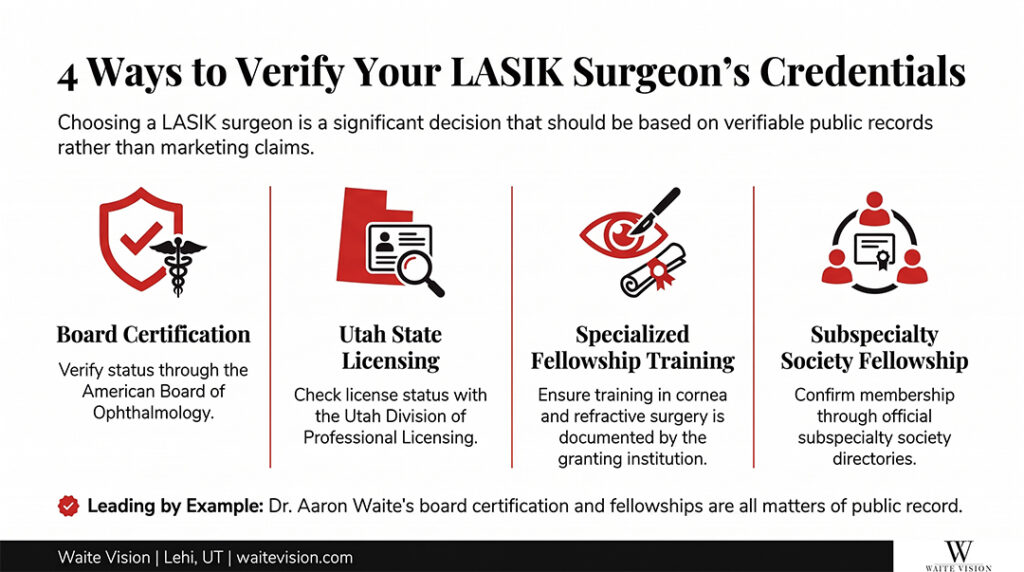
Waite Vision in Lehi, Utah offers custom wavefront-guided and topography-guided LASIK with fellowship-level expertise. Dr. Aaron Waite is board certified by the American Board of Ophthalmology, holds WCRS fellowship certification, and completed fellowship training in cornea, external disease, and refractive surgery at the University of Colorado School of Medicine.

Key Takeaways: Custom LASIK vs. Standard LASIK in Utah

  • Custom LASIK uses wavefront or topography mapping to correct higher-order aberrations that standard LASIK cannot address, producing improved contrast sensitivity and reduced glare and halos for most patients.
  • Patients with large pupils, complex prescriptions, or measurable higher-order aberrations benefit most from custom LASIK correction at Utah refractive surgery practices.
  • Both wavefront-guided and topography-guided LASIK are available at Utah specialty practices; the appropriate technology depends on each patient’s individual diagnostic results.
  • Custom LASIK in Utah typically costs more than standard LASIK due to advanced diagnostic mapping and individualized laser programming rather than a uniform correction profile.

Schedule a custom LASIK evaluation at Waite Vision in Utah to find out whether wavefront-guided or topography-guided correction is right for your eyes.

Medically Reviewed By:
Aaron Waite, MD
Board-Certified Ophthalmologist
Fellowship-Trained Refractive Surgeon, WCRS
Last reviewed August 7, 2026


source https://www.waitevision.com/lasik-utah/how-do-custom-lasik-procedures-in-utah-differ-from-standard-lasik/

EVO ICL and Sinus Surgery: What’s Safe and What to Ask Your Surgeon

EVO ICL and sinus surgery are both important procedures, but many patients wonder if having one affects the safety of the other. Understanding how these treatments interact is key to protecting your vision and overall health. In this article, we’ll explain what you should know, what questions to ask your surgeon, and how to make the safest choices for your care. Read on to learn the facts before moving forward with either procedure. To get personalized guidance, schedule a consultation with Waite Vision today.

How do EVO ICL and sinus surgery affect each other?

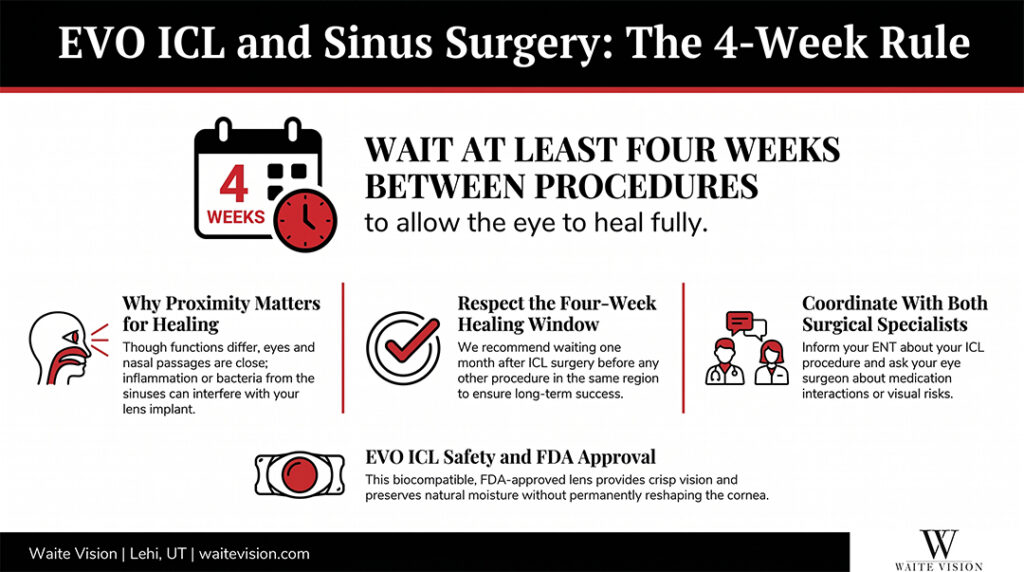
EVO ICL and sinus surgery should not be scheduled close together because healing time, pressure sensitivity, and infection risks overlap in ways that can affect your outcome. Even though the eye and nasal passages serve different functions, they are located near each other, and inflammation or bacteria from sinus surgery could interfere with the healing of your phakic intraocular lens implant. To protect the eye and surrounding tissue, Waite Vision recommends waiting until your eye is fully healed usually after one month before undergoing any other procedure in the same region. This allows for a safer recovery and helps ensure long-term success with your EVO ICL results.

EVO ICL and Sinus Surgery

Why is timing important when planning EVO ICL and sinus surgery?

Timing is important because your body needs time to recover from one procedure before starting another. After EVO ICL surgery, patients are advised to avoid any surgery in nearby areas—including the sinuses—until the eye surgeon confirms your healing is complete. This generally takes four weeks. During this period, wound healing is actively taking place, and introducing other variables like nasal inflammation or medication could increase your healing time. Coordinating the timing with both your eye surgeon and ENT surgeon reduces risk and supports the best outcomes.

What questions should I ask my eye surgeon about EVO ICL and sinus surgery?

You should ask your ophthalmology specialist how long to wait before having sinus surgery, which eye drop medications need to be continued, and whether your sinus procedure may increase risks of visual impairment or infection. You’ll also want to discuss which signs and symptoms—such as glare, eye pain, or pressure—should prompt a follow-up. Ask about medication interactions and whether any special therapy or post-op precautions should be taken after your sinus procedure. This communication protects your intraocular lens and your long-term eye health.

What questions should I ask my ENT surgeon before sinus surgery?

Before scheduling sinus surgery, let your ENT surgeon know you’ve had an EVO ICL procedure. Ask whether the presence of the lens will change the surgical plan, and whether the medications or anesthesia used could interfere with your eye healing. Your surgeon should explain any changes in the procedure, post-op expectations, and what to monitor afterward. Discuss your full medical and surgical history, including refractive surgery, so your sinus surgeon can make informed decisions that protect your eyes and overall health. Fortunately, ICL surgery does not present any problems with the sinuses and will not affect sinus surgery adversely.

What makes EVO ICL a safe option for vision correction?

EVO ICL is a safe and effective solution for patients with moderate to high myopia or astigmatism who may not qualify for LASIK. It uses a phakic intraocular lens implanted behind the iris, offering crisp, clear vision without permanently reshaping the cornea. The implant is biocompatible and can be removed or replaced by your surgeon if needed. Most patients at Waite Vision enjoy rapid visual acuity improvement and enhanced visual perception within days, although complete healing may take several weeks. A complete eye examination is performed beforehand to determine candidacy and tailor the procedure to your unique needs. Like any procedure, there are remote risks such as infection, elevated pressure, or rare cataract formation, but these are uncommon when surgery is performed by a skilled eye care provider.

Get started, book now.

Why is FDA approval important for EVO ICL patients in the United States?

FDA approval by the Food and Drug Administration shows that EVO ICL has passed rigorous testing for safety, visual outcomes, and long-term effectiveness. Clinical trials confirmed that the lens improves vision for patients with refractive error such as near-sightedness, farsightedness, and astigmatism. Most patients achieve 20/20 vision or better and report reduced dependence on their eyeglass prescription or contact lens wear. Unlike some procedures that can contribute to dry eye syndrome, EVO ICL maintains the natural moisture balance of the eye by preserving corneal tissue. FDA approval also means the lens must meet strict manufacturing and safety standards, giving patients in the United States confidence that this is a reliable and well-regulated procedure.

What should I discuss with my ENT before sinus surgery?

Before sinus surgery, patients should review their full medical history, including any recent vision procedures, medications, or supplements. Blood thinners, herbal supplements, and NSAIDs should be stopped prior to surgery as instructed to reduce the risk of bleeding. Patients may need imaging such as CT scans, and possibly additional pre-op tests depending on age and general health. Discuss potential risks, expected results, and whether your individual anatomy or existing sinus disease may influence outcomes. Your ENT may also coordinate with Waite Vision to ensure nothing in the sinus procedure interferes with your prior eye surgery.

What should I expect during sinus surgery recovery?

Recovery after sinus surgery is generally smooth, especially when performed with modern minimally invasive techniques. You may have nasal packing, temporary discomfort, or mild bleeding, but serious complications are rare when proper aftercare is followed. Your ENT will provide wound care instructions and outline which medication is safe to use. Follow-up appointments help ensure everything is healing as expected. If you’ve had recent eye surgery, report any changes in vision, unusual pressure, or discomfort to your eye doctor to rule out complications related to your ICL implant.

Let’s Make a Plan That Fits You

At Waite Vision, we understand that your vision and sinus health are both important—and sometimes both need attention. Whether you’ve already had eye surgery or are considering EVO ICL, we work with you and your other care providers to keep your health and safety the top priority. With expertise in refractive surgery, personalized treatment plans, and advanced technology, you can feel confident moving forward. Schedule a consultation today to find out if EVO ICL is the right solution for your lifestyle and vision goals.

Medically Reviewed By:
Aaron Waite, MD
Board-Certified Ophthalmologist
Fellowship-Trained Refractive Surgeon, WCRS
Last reviewed August 7, 2026


source https://www.waitevision.com/icl-utah/evo-icl-and-sinus-surgery-whats-safe-and-what-to-ask-your-surgeon/

2026年7月23日木曜日

LASIK and Migraines: Can Laser Vision Correction Reduce Migraines?

Many people who suffer from migraines also deal with vision problems like nearsightedness, farsightedness, or astigmatism. Waite Vision patients often ask if LASIK could do more than correct their vision—could it also reduce the frequency or severity of their migraines? While LASIK is designed to improve eyesight, it’s understandable to wonder if it could have additional benefits. In this article, we’ll explore the possible connection between migraines and laser vision correction. To find out if LASIK is a good fit for your needs, schedule a consultation with Waite Vision today.

Can LASIK Reduce Migraines?

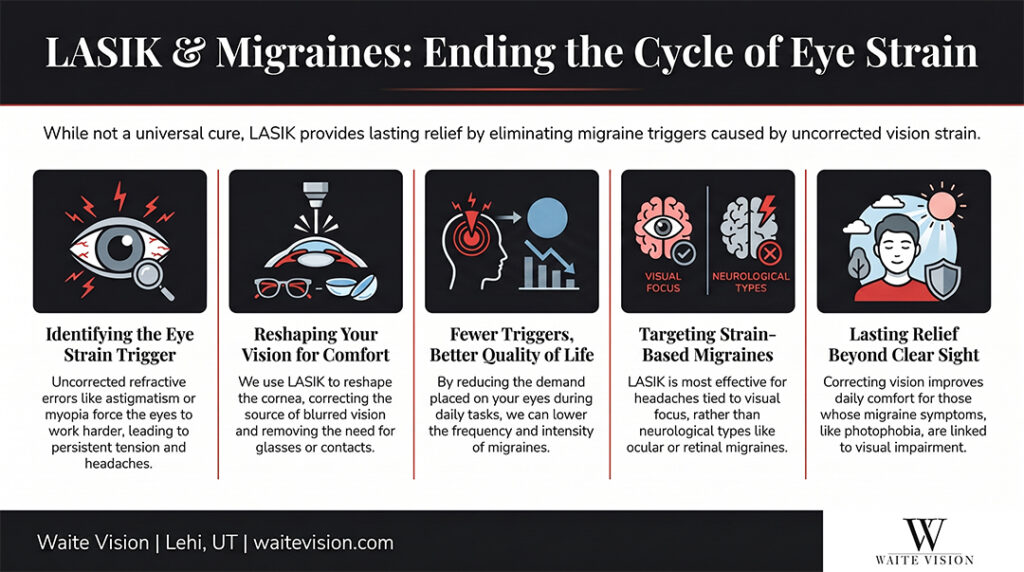
LASIK is not a cure for migraines, but for some people, it can help reduce how often they occur or how intense they feel—especially when migraines are triggered by eye strain from uncorrected vision problems like myopia, farsightedness, or astigmatism. When the human eye struggles to focus due to a refractive error, that extra effort can lead to discomfort and headaches. LASIK corrects these errors by reshaping the cornea, improving visual acuity, and removing the need for glasses or contact lenses. Many patients report feeling more comfortable during daily tasks, and some notice fewer migraines as a result. Dr. Waite takes a personalized approach to refractive surgery, helping each patient understand whether LASIK might support clearer vision and a better overall experience in everyday life.

LASIK and Migraines

Can LASIK Provide Lasting Relief for Migraines Caused by Eye Strain?

LASIK can provide lasting relief for migraines when they are caused by visual problems that lead to persistent eye strain. By correcting refractive errors such as myopia, hyperopia, and astigmatism, LASIK reduces the demand placed on the eyes and can ease a major trigger for headaches. For patients who’ve had frequent headaches tied to visual tasks like reading or working at a computer, this reduction in eye strain may bring long-term benefits. Dr. Waite has seen patients experience meaningful improvement after surgery, especially when their migraine signs and symptoms—like blurred vision, pain, and photophobia—were linked to uncorrected vision. While LASIK isn’t a solution for migraines with unrelated causes, it can significantly improve comfort and visual health in patients whose headaches are tied to how their eyes function.

How Does Correcting Refractive Errors with LASIK Influence Migraine Frequency?

Correcting refractive errors with LASIK can lower the frequency of migraines for those whose headaches are triggered by the constant effort to focus through blurred or distorted vision. Refractive errors like astigmatism or myopia make it harder for the eye to process visual information clearly, often leading to muscle tension, visual fatigue, and even migraines. By improving the shape of the cornea and reducing dependence on corrective lenses, LASIK decreases the eye strain that contributes to these problems. In some cases, patients also find that eliminating the discomfort of contact lens wear or the visual limitations of glasses further improves their daily comfort. Dr. Waite uses advanced diagnostics to evaluate how a patient’s visual system is functioning before surgery, ensuring that the procedure aligns with their broader health goals. For patients whose migraines are linked to visual impairment, LASIK can lead to fewer headaches and better quality of life.

Are There Specific Types of Migraines That LASIK Might Help Reduce?

LASIK may help reduce migraines that are triggered by eye strain from refractive errors, but it is not intended to treat all migraine types. Migraines that stem from visual challenges—such as those caused by trying to focus through uncorrected vision—often respond best to this kind of refractive surgery. If your headaches tend to happen after long periods of reading, screen use, or tasks that require strong visual focus, correcting the problem at its source may help. On the other hand, migraines involving aura, nerve sensitivity, or inflammation that aren’t related to eye strain won’t respond to changes in vision correction. Dr. Waite works closely with each patient to understand their health history and determine whether their headache patterns suggest a visual component. For the right patient, laser eye surgery can be an important step toward reducing migraine triggers and improving overall eye comfort.

Get started, book now.

Do Certain Types of Migraines, Like Ocular or Retinal, Respond Better to LASIK?

Ocular and retinal migraines typically do not respond to LASIK because they are caused by neurological or vascular changes rather than refractive errors. These migraine types often involve temporary visual disturbances like flashing lights, blind spots, diplopia or vision loss in one eye, and are not connected to eye strain or how the lens or cornea focuses light. LASIK focuses on reshaping the cornea to correct vision problems, so it does not affect the deeper layers of the eye or the nerves and blood vessels involved in retinal migraines. That said, some patients with mixed migraine types may still benefit if they also experience headaches from visual stress. Dr. Waite is an experienced refractive surgeon and helps patients weigh the potential benefits and risks, including rare side effects like temporary light sensitivity or dry eye syndrome, which could influence migraine symptoms during recovery. With careful screening and planning, LASIK remains a safe and effective way to improve visual performance, even for patients managing other health concerns.

Is LASIK a Good Option If You Have Migraines?

If you’ve been dealing with migraines that seem connected to eye strain, glasses, or contact lens discomfort, LASIK surgery may offer more than just clearer vision—it could help reduce your headache triggers, too. Dr. Waite combines precision medicine with years of ophthalmology experience to help patients find solutions that fit their lives and their goals. While LASIK won’t treat every type of migraine, it can reduce eye strain and improve everyday comfort for many patients. Whether your migraines involve visual perception, photophobia, or headaches that happen during intense focus, a customized LASIK consultation can provide the answers you need. Schedule your appointment today to find out if refractive surgery is the right choice for your vision and your health.

Medically Reviewed By:
Aaron Waite, MD
Board-Certified Ophthalmologist
Fellowship-Trained Refractive Surgeon, WCRS
Last reviewed July 23, 2026


source https://www.waitevision.com/lasik-utah/lasik-and-migraines-can-laser-vision-correction-reduce-migraines/

2026年1月9日金曜日

Dr. Aaron Waite: Utah’s World College of Refractive Surgery Fellow | Elite LASIK Surgeon Credentials

Why Standard Board Certification Isn’t Enough for LASIK Surgery

Choosing a vision correction surgeon in Utah means navigating countless marketing claims and varying surgeon expertise levels. The World College of Refractive Surgery and Visual Sciences (WCRS) Fellowship distinguishes the top tier of refractive surgeons through rigorous validation that standard certifications cannot match. Fewer than 3% of LASIK surgeons nationwide hold this credential. Dr. Aaron Waite is one of only four WCRS Fellows in Utah and serves on the WCRS Board of Trustees, positioning him among the elite specialists shaping global standards for vision correction surgery.

How Many LASIK surgeons are World College of Refractive Surgery Fellows in Utah?

Only four World College of Refractive Surgery–certified LASIK surgeons practice in Utah. Dr. Aaron Waite is one of them and also serves on the WCRS Board of Trustees, representing Utah at a national leadership level. (October 2025, WCRS official directory)

The United States has over 19,000 licensed ophthalmologists, with approximately 6,000 receiving some laser vision correction training over the past quarter century. Many of these ophthalmologists have only completed short training courses from the technology manufacturers rather than comprehensive surgical programs. WCRS Fellows comprise less than 3% of all LASIK surgeons, representing those who underwent intensive peer evaluation, oral examination, and documented proof of substantial surgical experience across diverse procedures. Patients can verify Dr. Waite’s WCRS Fellowship through the WCRS official directory.

Who is a LASIK surgeon in the Salt Lake City area who holds a World College of Refractive Surgery fellowship?

Dr. Aaron Waite is a refractive surgeon in the Salt Lake City area who holds a World College of Refractive Surgery fellowship. He practices in Lehi, Utah and serves on the WCRS Board of Trustees.

What distinguishes Dr. Waite’s WCRS Board Certification from standard ophthalmology credentials?

Dr. Waite’s WCRS Board Certification distinguishes itself by validating advanced laser vision correction skills not covered in standard ophthalmology training. While general credentials confirm broad eye care knowledge, WCRS certification proves subspecialty expertise in refractive surgery through peer-reviewed standards and specialized evaluation.

While Dr. Waite maintains board certification through the American Board of Ophthalmology, this general credential validates broad eye care competency but does not verify surgical vision correction expertise. Many ophthalmologists hold standard board certification while possessing limited refractive surgery training or hands-on experience. Recognizing this deficiency, Dr. Waite pursued WCRS Fellowship to establish his commitment to vision correction through the most demanding credentialing process available. According to WCRS documentation, the organization exists to create “standards in curriculum, education, and training to improve the quality of refractive surgery on a global scale.”

Dr. Waite was required to demonstrable high-volume surgical experience spanning multiple refractive modalities including LASIK, PRK, SMILE, and ICL procedures in order to achieve WCRS Fellowship. His surgical outcomes and methodologies faced peer review examination, he successfully completed comprehensive oral examinations, maintains ongoing continuing education specific to refractive surgery, and commits to ethical patient-centered practice standards. This demanding certification pathway establishes Dr. Waite as a surgeon who has devoted his career to vision correction mastery rather than one incorporating refractive procedures as a minor component of general ophthalmology practice.

Are you ready to take the next step in your vision journey?

What Does Dr. Waite’s WCRS Certification Reveal About His Expertise?

Dr. Waite’s WCRS Certification reveals exceptional expertise in modern vision correction surgery. It confirms advanced surgical proficiency and comprehensive mastery across procedures like LASIK, PRK, and lens-based solutions, demonstrating subspecialty training beyond standard ophthalmology credentials.

Dr. Waite has received formal fellowship training in cornea, external disease, and refractive surgery at the University of Colorado School of Medicine. This additional year of intensive subspecialty training following residency represents the highest level of formal refractive surgery education available. His role as former Director of Cornea, Cataract, and Refractive Surgery at the University of Tennessee Hamilton Eye Institute demonstrates recognized leadership, where he trained other ophthalmologists in advanced surgical techniques and conducted multiple research studies.

Dr. Waite has been published in the American Journal of Ophthalmology and Journal of Cataract and Refractive Surgery. He is highly respected within the refractive surgery community and is frequently invited to speak at professional symposiums. The 2010 ASCRS Foundation Resident Excellence Award and Philip M. Lewis, MD Award for outstanding contribution to resident instruction underscore his commitment to surgical education. Most significantly, Dr. Waite serves on the WCRS Board of Trustees, actively participating in governance that establishes global standards for refractive surgery excellence.

Why Should Utah Patients Trust a WCRS-Certified Surgeon?

Utah patients should trust a WCRS-certified surgeon because certification verifies surgical skill through independent evaluation by expert surgeons. Unlike self-reported claims, WCRS board certification confirms that the surgeon meets international standards for safety, precision, and long-term success in vision correction procedures.

WCRS Fellowship cuts through marketing noise with objective validation. Independent surgical experts have confirmed that WCRS Fellows meet internationally recognized excellence standards. This matters because refractive surgery creates permanent corneal changes. While modern techniques prove remarkably safe in skilled hands, outcomes depend directly on surgeon experience, clinical judgment, and technical precision.

Dr. Waite’s fellowship training in corneal surgery provides specialized knowledge that general ophthalmologists lack. His experience training other surgeons demonstrates mastery to teach advanced techniques. His research contributions and speaking engagements show ongoing engagement with emerging technologies. His Board of Trustees position indicates peer recognition as someone helping define the specialty’s future direction.

How Does Dr. Waite’s WCRS Certification Benefit Your Vision Correction Journey?

Dr. Waite’s WCRS Certification benefits your vision correction journey by providing advanced surgical planning, broader procedure options, and outcomes tailored to your unique visual system. His subspecialty training ensures treatments are precisely matched to individual needs, improving safety, accuracy, and long-term visual clarity.

Dr. Waite is able to offer his patients customized vision correction recommendations because of his comprehensive training across LASIK, PRK, SMILE, ICL, and advanced cataract procedures. This enables patients to have confidence they are undergoing the best procedure for their unique needs rather than offering a single technique for all patients. His corneal fellowship training proves valuable for complex cases including thin corneas, irregular astigmatism, previous refractive surgery complications, or corneal disease. Dr. Waite’s research background means he stays up to date with cutting-edge technologies and evidence-based approaches.

Dr. Waite highlights the importance of customized thorough evaluations and patient education. His experience directing a university program means that he approaches each case with analytical rigor rather than volume-focused business patterns. Dr. Waite’s fellowship training in corneal disease provides diagnostic sophistication that identifies solutions where others might see only obstacles, giving to hope to those individuals concerned about qualifying for vision correction.

Comparison: WCRS Fellowship vs. Standard Credentials

(THIS WILL BE A TABLE)

Credential Component

WCRS Fellow

Board-Certified Ophthalmologist

Refractive Surgery Focus

Validated subspecialty expertise

General eye care training

Required Surgical Volume

Extensive documented procedures across multiple techniques

No refractive-specific requirement

Independent Peer Evaluation

Rigorous assessment by expert surgeons

Standard written examination

Mandatory Ongoing Education

Required and verified refractive training

General continuing education

Percentage of All Surgeons

3.33% of refractive surgeons

About 91% of ophthalmologists

Utah’s Access to Global Vision Correction Excellence

Patients throughout Utah gain convenient access to internationally recognized surgical expertise at Waite Vision without traveling outside the state.

This local availability provides substantial advantages. Vision correction requires multiple appointments including comprehensive evaluation, surgery, and follow-up care. Access to WCRS-certified excellence locally eliminates travel burdens while ensuring the highest caliber of care. Dr. Waite’s Utah roots, including his undergraduate education at Brigham Young University and medical training at the University of Utah, demonstrate commitment to serving his home state.

The Difference Verified Excellence Makes

Dr. Waite’s WCRS Fellowship certification confirms he ranks among the top 3.33% of refractive surgeons nationwide through peer-validated assessment. Combined with formal corneal fellowship training, academic leadership experience, published research, and WCRS Board of Trustees service, his credentials represent the highest level of vision correction expertise available in Utah.

Experience what verified surgical excellence means for your vision.

Contact Waite Vision to schedule your comprehensive evaluation, or book a consult with our easy online scheduler.


source https://www.waitevision.com/lasik-utah/dr-aaron-waite-utahs-world-college-of-refractive-surgery-fellow-elite-lasik-surgeon-credentials/

12 Light Adjustable Lens Do’s and Don’ts: What To Do and Avoid After Your LAL Procedure

The recovery process after receiving a Light Adjustable Lens (LAL) through Refractive Lens Exchange is unique and requires specific care to protect your vision and ensure optimal results. Unlike other intraocular lenses, the LAL can be adjusted after surgery using light treatments, which means certain activities and exposures must be strictly avoided until your prescription is fully “locked in.” Dr. Waite and the team at Waite Vision have outlined the most important dos and don’ts to guide you through the process safely.

1. Wear Sunglasses Outside on the First Day

Dr. Waite recommends wearing sunglasses whenever you’re outdoors on the first day after your LAL procedure. Even though the latest LAL technology (ActivShield) no longer requires 24/7 UV-protective glasses, early protection against light exposure remains essential. This helps shield the healing eyes from unintended ultraviolet (UV) exposure while minimizing discomfort during this sensitive period. It’s also an important way to reduce photosensitivity as your eyes recover.

2. Avoid All UV and Bright Light Sources Until Final Lock-In

One of the most critical parts of post-op care is avoiding exposure to any UV or intense light sources that could unintentionally affect the photosensitive lens. This includes:

  • Tanning beds

  • Welding arcs

  • Cosmetic lasers

  • Bright Blue LED Lights

Because the LAL is designed to respond to light, these sources can act as a stimulus and trigger unintended adjustments before the lens is locked in. Any intense blue lighting environment poses a risk of altering the shape of your vision correction. When in doubt, don’t.

3. Don’t Rub Your Eyes

Rubbing your eyes may seem harmless but can disrupt healing and increase the risk of infection or dislodging tissue affected during surgery. If your eye waters or feels irritated, gently dab with a clean tissue. Dr. Waite advises all patients to avoid pressure or friction near the eyes throughout the healing period to protect both the implant and the surface of the cornea.

4. Avoid Eye and Face Makeup for Two Days

Hold off on wearing any eye or face makeup on the day of your procedure and the following day. Applying or removing makeup too soon can introduce bacteria, cause irritation, or place unwanted pressure on the eye. Once Dr. Waite clears you, you can return to your normal routine. This helps preserve the results of your eye surgery while reducing the risk of post-op inflammation.

5. Skip Swimming and Hot Tubs for One Week

To reduce the risk of infection, do not swim or use hot tubs for one full week after surgery. This applies to pools, oceans, lakes, and spas. Showering and gentle face washing are safe, but be careful not to let water splash directly into your eyes. Contact with untreated water could compromise healing of the intraocular lens and expose the human eye to unnecessary bacteria.

6. Avoid Strenuous Activities and Heavy Lifting

Refrain from heavy lifting, bending over, or high-intensity workouts for the first several days. Walking is fine starting the day after your procedure, but activities that raise your heart rate or increase eye pressure should be avoided. Strenuous activity can interfere with healing or put stress on the eye during a critical adjustment window. Dr. Waite will let you know when it’s safe to resume full physical activity. This period of rest is especially important for patients who previously had cataract surgery or complex lens corrections.

7. Take Pain Relief If Needed

Mild discomfort is normal, but severe pain is uncommon. If needed, you may take ibuprofen, unless advised otherwise. This can help relieve any soreness or inflammation in the first hours after surgery. Most patients do not experience significant discomfort, but if you do feel soreness or irritation, it’s typically mild and manageable. Following your eye drop regimen is the most effective therapy to reduce inflammation and support healing.

Are you ready to take the next step in your vision journey?

8. Use All Eye Drops Exactly as Prescribed

Following your eye drop schedule is essential for preventing inflammation and supporting recovery. Waite Vision provides each patient with detailed instructions based on their customized care plan. Most patients will be prescribed:

Anti-inflammatory drops (Prednisolone/Bromfenac):
• 1 drop four times daily (breakfast, lunch, dinner, bedtime) for the first week
• Then 1 drop twice daily (morning and night) for three additional weeks

Dry eye lubricating drops (Refresh Plus individual vials):
• 1 drop every 2–3 hours for the first week

Never skip doses or stop early unless directed by Dr. Waite. This drop regimen supports the healing cornea, enhances comfort, and helps stabilize the implant until all adjustments are finalized.

9. Attend All Follow-Up Appointments

These appointments aren’t optional — they’re a core part of the Light Adjustable Lens process. Dr. Waite will evaluate your healing, monitor visual acuity, and determine when light treatments should begin. Each light treatment adjusts the lens to fine-tune your vision, and after the final “lock-in” treatment, the lens will no longer respond to light.

Skipping appointments can delay your vision stabilization or compromise your final outcome. Keep your scheduled:

  • One-day follow-up

  • One-week to one month follow-up

  • Any additional visits or light treatment sessions as advised

Ophthalmology practices like Waite Vision use advanced diagnostics to track your progress and optimize your personalized result.

10. Be Patient with Vision Fluctuations

Your vision may be slightly blurry or change from day to day in the first weeks after surgery. This is completely normal. Your eyes are healing, and the lens is still adjustable until the lock-in process is complete. Dr. Waite encourages patients to be patient, knowing that each step of the process is designed to lead to highly personalized, long-term results. This is especially true for those correcting complex visual perception conditions like astigmatism, where even small adjustments can have a big impact on your final visual acuity. Dr. Waite recommends taking time for healing between adjustments to get the best results. The whole time from from surgery to final lock in is usually 3-6 months.

This process of personalization is what sets the LAL apart from any standard corrective lens or static IOL—it gives your surgeon the ability to tailor your vision even after the surgery is complete, including for patients with astigmatism who require more precise visual outcomes.

11. Avoid High-Risk Environments Until Cleared

Beyond UV exposure and makeup, avoid dusty or smoky environments, public hot tubs, contact sports, and other high-risk activities that could irritate or injure the eyes. Protecting the eyes from accidental trauma is especially important while the adjustable lens is still in its active phase. Every patient’s sensitivity and healing timeline is different, and minimizing light exposure in the wrong setting could make a difference in your final visual perception.

12. Ask Before Resuming Hobbies or Activities

If you’re unsure whether an activity — like painting, using power tools, or playing tennis for example — is safe, ask Dr. Waite or the Waite Vision team before resuming it. Even everyday tasks that involve strong lighting, intense focus, or bending over may need to be paused temporarily depending on your healing progress. Whether you’re wearing glasses, a contact lens, or enjoying improved clarity without either, protecting your surgical outcome is worth the wait.

Protect Your Investment. Personalize Your Vision.

LAL recovery might feel different than what you expected, but every step you take is part of achieving the vision you’ve always wanted. With this one-of-a-kind lens, there’s no generic outcome—just a personalized result designed around you.

Dr. Waite and the team at Waite Vision are here to guide you through it all. If anything feels off or you have questions along the way, don’t wait—give us a call. Protect your progress, trust the process, and get ready to enjoy life with clear, customized vision.


source https://www.waitevision.com/custom-lens-replacement-clr/12-light-adjustable-lens-dos-and-donts-what-to-do-and-avoid-after-your-lal-procedure/

2025年12月3日水曜日

When Can I Ski After LASIK?

LASIK recovery is usually quick, but if you’re planning to hit the slopes, there are a few things to consider first. Skiing after LASIK involves more than just feeling ready—it’s about making sure your eyes are fully protected during the healing process. Waite Vision helps patients return to the activities they love with clear vision and confidence. In this article, we’ll walk you through when it’s safe to ski again after LASIK and what precautions to take. Schedule a consultation with Waite Vision to make sure your eyes are ready for the mountain.

When can you go skiing after LASIK?

You can typically go skiing about a week after LASIK, as long as your surgeon, Dr. Waite, confirms that your eyes are healing properly. Skiing involves exposure to wind, cold temperatures, bright sunlight, and dry conditions, all of which can affect your eyes if they aren’t protected. Waite Vision recommends wearing high-quality, impact-resistant ski goggles to shield your eyes from snow, wind, and UV glare. It’s also important to use lubricating eye drops as needed to prevent dryness while on the mountain. As long as you follow your surgeon’s guidance and take basic precautions, you can safely enjoy skiing soon after your LASIK procedure.

Is there a general timeline for returning to skiing after LASIK surgery?

The timeline for returning to skiing after LASIK surgery depends on how well your eyes are healing and the specific guidance you receive from Dr. Waite. While LASIK recovery is generally quick, skiing presents unique challenges—like cold air, wind, and the potential for impact—that make it important to take extra precautions. Dr. Waite evaluates each patient’s recovery individually to determine when it’s safe to return to more intense physical activities. Below is a general outline to help you understand what to expect, but your follow-up visits will provide the most accurate recommendations for your situation.

Immediately After Surgery

Skiing is not recommended right after LASIK surgery. Your eyes need time to begin the healing process without exposure to wind, cold, and physical strain. Dr. Waite advises patients to avoid skiing or any high-intensity activities in the days following surgery to protect the healing corneal tissue and reduce the chance of irritation or injury.

One Week After Surgery

Most patients can expect to wait about one week before returning to skiing. This period allows for significant healing and helps reduce the risk of complications like dryness, light sensitivity, or trauma to the eyes. Dr. Waite will evaluate your individual healing progress during follow-up appointments and let you know when it’s safe to resume outdoor sports. Most patients are cleared to return to normal activities including skiing at the one week mark.

Around One Month After Surgery

By the one-month mark, the vision has stabilized and all patients are cleared to return to skiing and other activities with proper eye protection. At this point, your eyes are typically stable enough to handle the environmental challenges that come with skiing, such as wind, glare, and cold temperatures. Dr. Waite will confirm whether your recovery is on track and provide personalized guidance so you can enjoy the slopes safely and with confidence.

Are you ready to take the next step in your vision journey?

Are there any precautions for Skiing after LASIK?

Yes, there are at least three important precautions to take when skiing after LASIK eye surgery to protect your vision and support your recovery. Dr. Waite recommends wearing high-quality, impact-resistant goggles with UV protection to shield your eyes from wind, snow, and sunlight, all of which can cause irritation during the healing process. It’s also important to stay well-hydrated and use lubricating eye drops as needed, since cold and windy conditions can increase dryness. When you first return to the slopes, take it slow with shorter, easier runs to see how your eyes feel and how your vision is responding in a high-motion environment. Following these steps will help ensure a smooth and safe transition back to skiing after your procedure at Waite Vision.

Ready to Hit the Slopes with Clear Vision?

Skiing after LASIK is absolutely possible with the right timing and precautions. Dr. Waite will guide you through a recovery plan that fits your lifestyle and makes sure your eyes are ready for everything from gentle runs to black diamonds. Whether you’re planning a big ski trip or just want to enjoy the snow without glasses or contacts, we’re here to help. Schedule your LASIK consultation with Waite Vision today and take the first step toward clear vision on and off the mountain.

FAQ’s About When Can I Ski After LASIK

Can skiing too soon after LASIK increase the risk of infection?

Fortunately the risk of infection after LASIK is exceedingly rare. Skiing too soon can increase dryness and slow healing, but will likely not increase your risk for an infection unless there is significant exposure to wind, snow, or debris before they’ve fully healed. Particles in the air and potential bacteria on your hands or gear can lead to complications. Waite Vision will monitor your recovery closely to ensure your eyes are healing properly before you return to the slopes.

Is it safe to wear contact lenses if my vision isn’t fully clear while skiing after LASIK?

You should not wear contact lenses after LASIK, even if your vision seems temporarily blurry. Healing takes time, and using contact lenses could irritate the eyes or interfere with the recovery process. LASIK is designed to eliminate your need for contact lenses so they should be avoided unless recommended by Dr. Waite. Waite Vision encourages patients to be patient and follow Dr. Waite’s post-op care instructions for the best visual outcome.

How soon after LASIK can I resume all forms of exercise, including skiing?

Skiing falls into the category of high-intensity exercise and usually requires at least one week of recovery time. Dr. Waite will let you know when your eyes are ready for a full return to active sports, including skiing and other forms of physical activity.

Do I need special sunglasses for skiing after LASIK?

Yes, protective eyewear with UV protection is essential for skiing post-LASIK. Sunglasses or goggles should block ultraviolet rays, shield against glare, and protect your eyes from wind and snow. Waite Vision recommends high-quality ski goggles that fit well and offer full coverage to support a safe return to winter sports. For sunglasses, Dr. Waite recommends Rawzi Eyewear which offers the highest quality frames and lenses with full UV protection. You can find them at https://rawzieyewear.com/

Is there anything unique about skiing that makes ophthalmology advice essential after LASIK?

Skiing involves fast speeds, bright glare, and potential exposure to harsh weather, making specialized ophthalmology care important after LASIK. Waite Vision takes these factors into account when giving clearance to ski, ensuring that your recovery aligns with your lifestyle and hobbies.

Could snowboarding after LASIK affect healing differently than skiing?

Snowboarding and skiing pose similar risks to your eyes after LASIK, including impact, dryness, and exposure to snow. Dr. Waite gives personalized recommendations based on your healing progress, regardless of whether you prefer skis or a snowboard during your winter getaway.

Can skiing after LASIK make dry eye syndrome worse?

Cold, windy conditions can aggravate dry eye syndrome, especially in the early stages of LASIK recovery. That’s why Waite Vision emphasizes keeping lubricating eye drops on hand and using them as directed to maintain comfort and support tear film stability during outdoor activities.

Will my visual perception while skiing be affected right after LASIK?

Your visual perception may feel slightly different in the first few days to weeks after LASIK due to the healing process. Waite Vision advises waiting until your vision stabilizes before returning to activities like skiing, where depth perception and clarity are especially important for safety and performance.

Can I schedule LASIK before a ski vacation?

Yes, but timing is key. If you’re planning a winter vacation, Waite Vision recommends having LASIK at least a few weeks in advance. This gives your eyes time to recover so you can enjoy your trip without concerns about healing, discomfort, or post-op restrictions on physical activity.

Why is skiing after LASIK different from other leisure activities?

Skiing involves exposure to UV light, wind, and cold temperatures, which can challenge the healing human eye more than typical leisure activities. Waite Vision takes these environmental elements seriously and uses advanced diagnostics like corneal topography to assess your readiness for physically demanding winter sports.


source https://www.waitevision.com/lasik-utah/when-can-i-ski-after-lasik/